

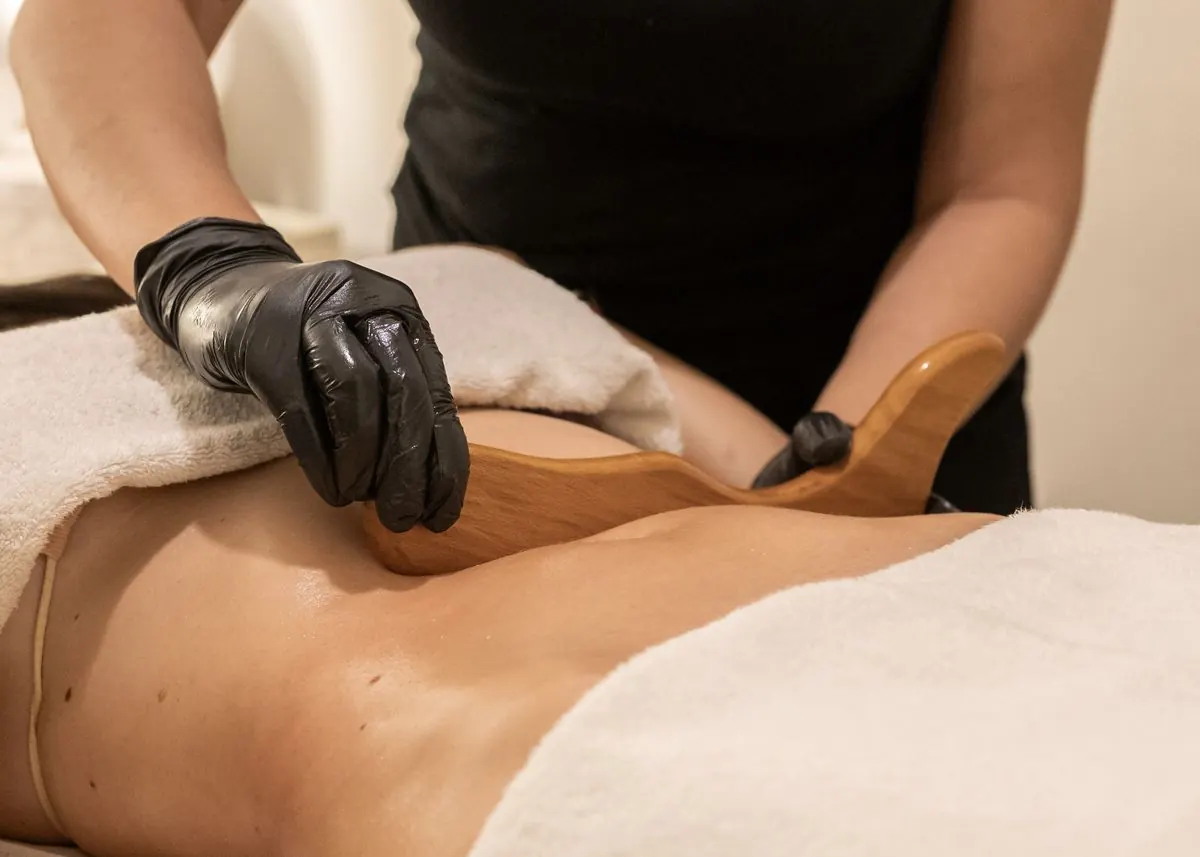
It’s the question we hear most often before a first session — and the honest answer is: it shouldn’t be. Wood therapy uses firm, rhythmic pressure, so you will definitely feel it working, but a good session sits somewhere between a deep-tissue massage and an intense stretch. It should never feel like something you have to endure.
Below we explain what the treatment actually feels like, why some areas are more sensitive than others, and what we do to keep every session comfortable while still getting results.
What does wood therapy feel like?
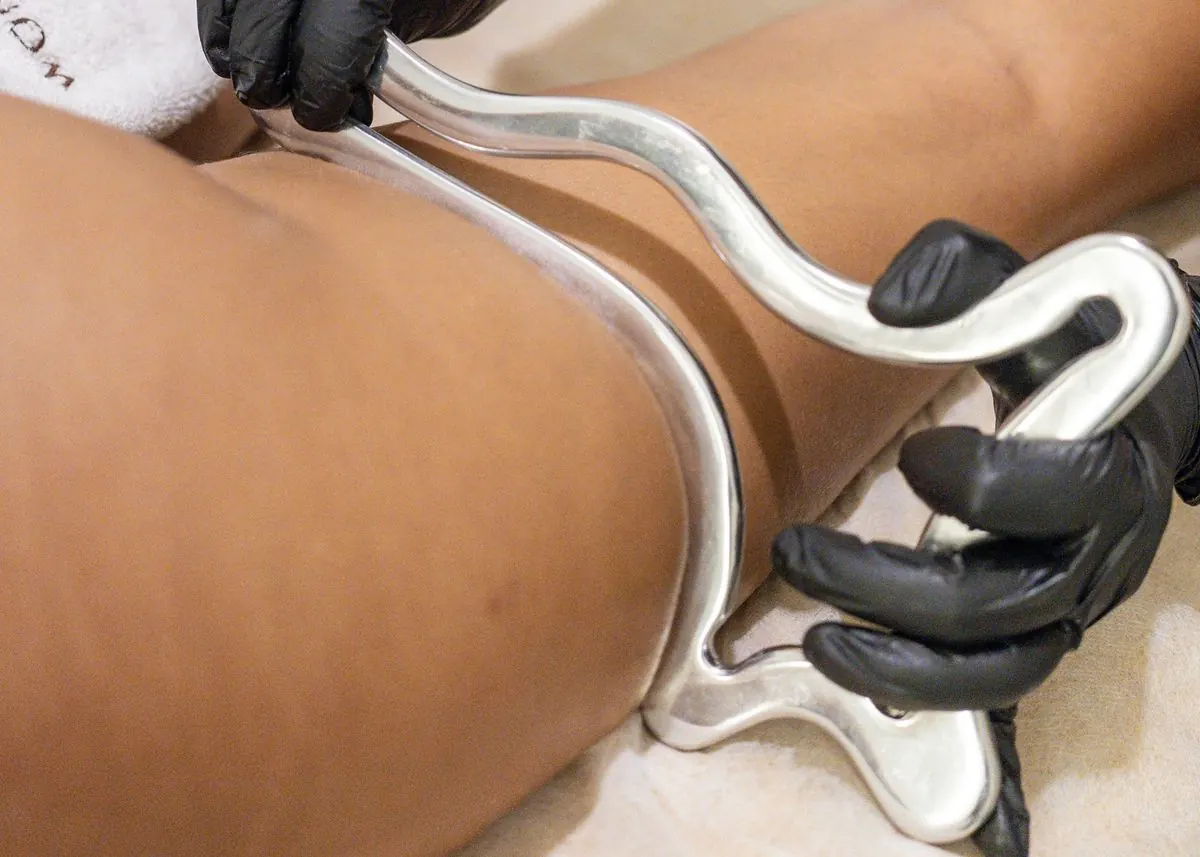
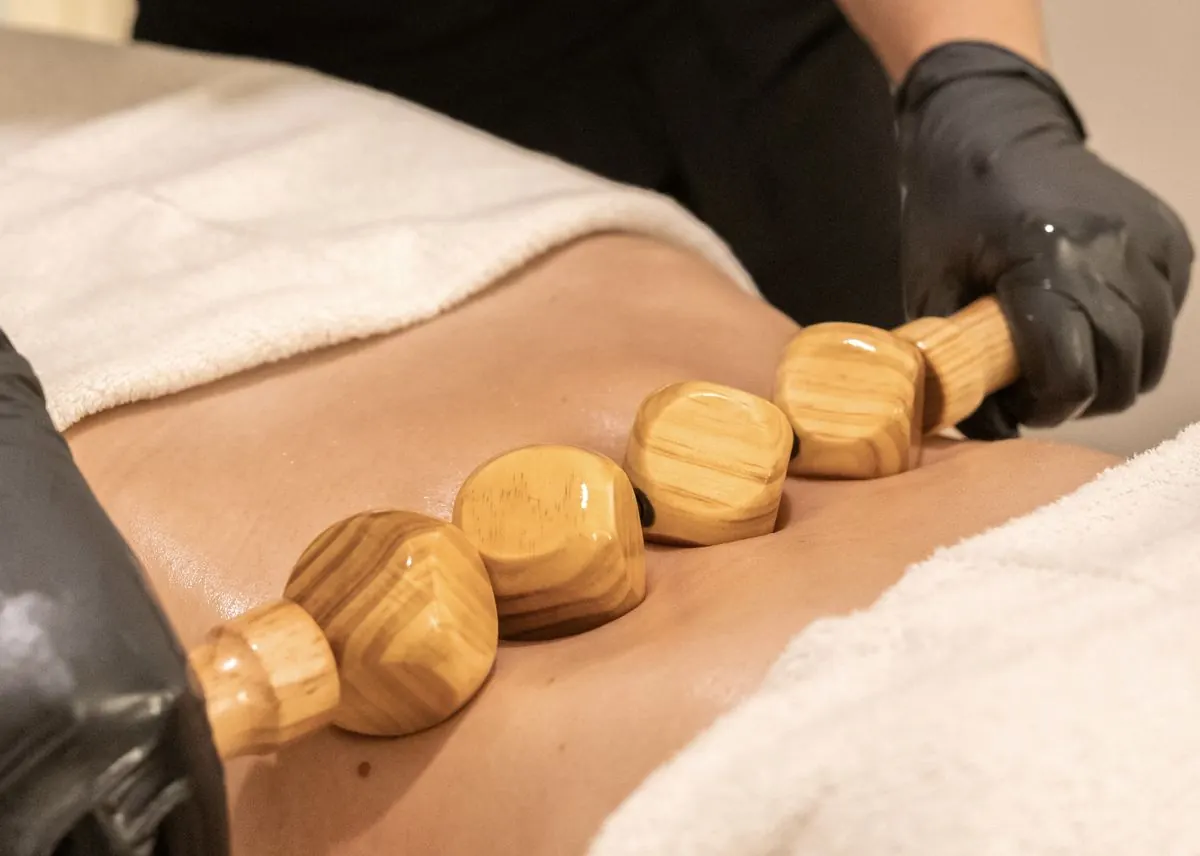
Wood therapy (also known as maderoterapia) is performed with ergonomically shaped wooden tools — rollers, cups and paddles — each designed for a different part of the body. Your therapist glides them over the skin with oil, combining pressure, rolling and draining movements that follow the direction of lymphatic flow.
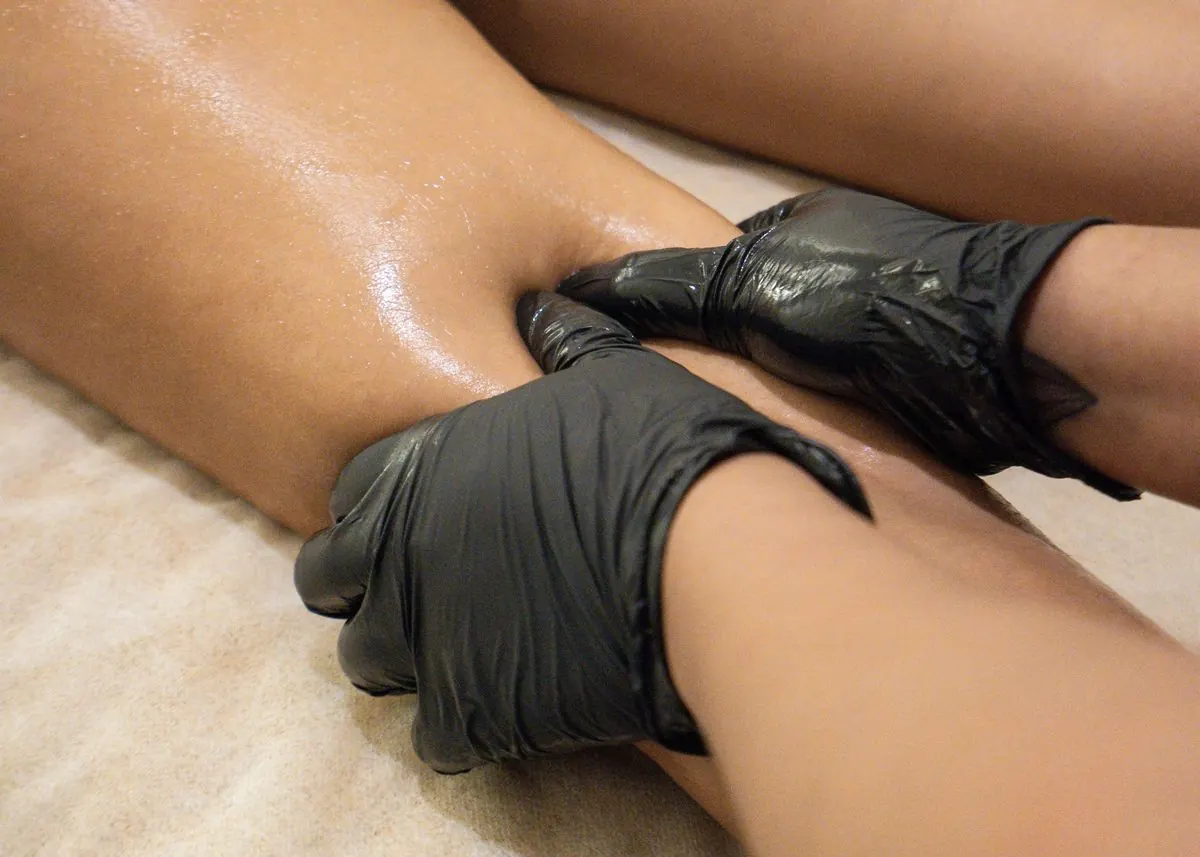
Most clients describe it as a deep-pressure massage: intense on some passes, relaxing on others. The rollers create a kneading sensation, while the cups and paddles feel more like a firm, sweeping pressure. Many people are surprised by how warm and “awake” the skin feels afterwards — that’s simply the increase in circulation.
Why some areas feel more sensitive
Sensitivity is rarely the same across the whole body. You are more likely to notice the pressure in:
- Areas with more fluid retention, such as the thighs, knees and ankles
- Zones with cellulite, where the tissue is denser and less mobile
- Places where you hold muscle tension — the lower back, shoulders or calves
- The inner thighs and arms, where the skin is thinner
This sensitivity usually decreases from one session to the next. As circulation improves and the tissue becomes more mobile, the same pressure feels noticeably lighter — something almost every client comments on by their third or fourth visit.
How we adapt the intensity to you
There is no fixed “level” of wood therapy. Before we start, your therapist asks about your goals, your sensitivity and any areas to avoid, and then adjusts during the session:
- Pressure: lighter on sensitive zones, deeper where the tissue allows it
- Tool choice: smoother tools for delicate areas, textured rollers where more work is needed
- Rhythm: slower, draining movements alternate with more intense sculpting passes
- Your feedback: you can ask us to go softer at any moment — we’d always rather you tell us
More pressure does not mean better results. Consistency, good technique and the right intensity for your body are what make the difference.
Is it normal to have bruises or redness afterwards?
Redness and warmth right after the session are completely normal and fade within a few hours. Some people — especially those with sensitive skin or who bruise easily — may notice light bruising on the first sessions. It’s temporary and usually disappears within a few days. If it happens, we simply adjust the intensity next time. You can read more in our article about bruising after treatment.
Tips for a comfortable first session
- Drink plenty of water the day before and the day of your session
- Avoid a heavy meal in the two hours before your treatment
- Tell your therapist about any sensitive areas, recent injuries or medical conditions
- Breathe slowly and relax the muscles — tension makes pressure feel stronger
- Speak up: adjusting the pressure is part of the treatment, not an interruption
Who should check with a doctor first?
Wood therapy is non-invasive, but it isn’t suitable for everyone. Please consult your doctor and let our team know before booking if you have varicose veins, a circulatory or blood-clotting condition, a skin infection or open wounds in the treatment area, or if you have had recent surgery. If you are pregnant, our Pregnancy Wonder Care treatment is designed specifically for you.
Frequently asked questions
Does wood therapy hurt?
It shouldn’t. You will feel firm pressure, similar to a deep-tissue massage, but the intensity is always adapted to your comfort. Sensitive areas are treated more gently.
Is the first session the most intense?
Often, yes. Areas with fluid retention or cellulite tend to be more sensitive at the start, and most clients find the pressure feels lighter after a few sessions.
Can I ask for less pressure during the session?
Absolutely. Your therapist will check in with you, and you can ask to go softer at any time without affecting your results.
How long does a session last?
We offer 60-minute sessions (Half Body or Express Full Body) and 90 or 120-minute Full Total Body sessions.
Leave a comment or question
Comments are reviewed by our team before being published. Your email will never be shown.