

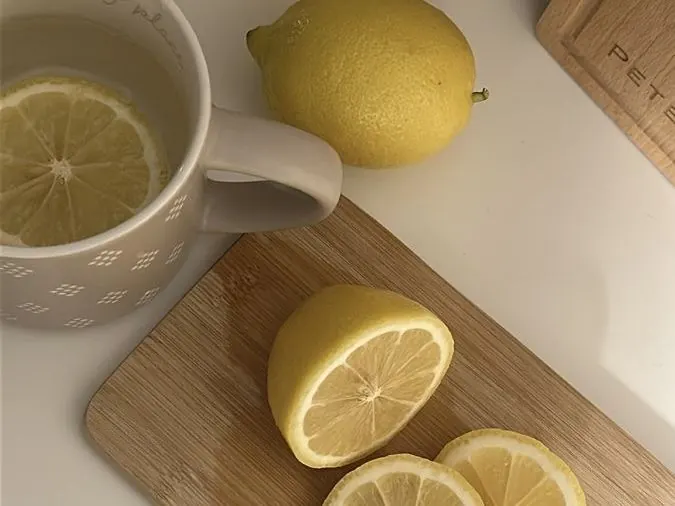
Feeling puffy, heavy or “swollen” — especially by the end of the day — is incredibly common, and in a hot climate like Bali it can feel even more noticeable. Bloating isn’t one single problem: it usually comes from a combination of how your body handles fluids, how you digest, and how much you move.
The good news is that most everyday bloating responds well to small, consistent changes. Here’s what tends to cause it and what genuinely helps.
Two different kinds of bloating
It helps to distinguish between two sensations that often get mixed up:
- Digestive bloating: a tight, full or gassy abdomen, often linked to what and how you eat
- Fluid retention: puffiness in the legs, ankles, hands or face, a “heavy” feeling and marks left by socks or rings
Many people experience both at the same time. Body treatments mainly help with the second one — fluid retention and circulation — while diet and habits influence both.
The most common causes
Fluid retention and heat
High temperatures dilate blood vessels and make it easier for fluid to accumulate in the tissues, particularly in the legs and ankles. Long flights, standing or sitting for hours and not drinking enough water make it worse.
Salt, sugar and processed food
Salty and highly processed meals encourage the body to hold on to water. Large amounts of sugar and refined carbohydrates can also contribute to that puffy feeling.
Lack of movement
Your lymphatic system has no pump of its own — it relies on muscle movement and breathing to circulate fluid. Long periods without moving slow everything down.
Stress, sleep and hormones
Stress and poor sleep affect digestion and fluid balance, and many women notice more bloating at certain points of their menstrual cycle.
Eating habits
Eating quickly, large meals late at night, fizzy drinks and certain foods that you personally don’t tolerate well are frequent triggers of digestive bloating.
Daily habits that make a difference
- Drink water regularly throughout the day, not all at once
- Reduce salt and ultra-processed food, and add more vegetables and potassium-rich foods
- Walk after meals, even for ten minutes
- Elevate your legs for a few minutes at the end of the day
- Eat slowly and avoid very large dinners
- Prioritise sleep and find simple ways to manage stress
How lymphatic drainage and sculpting help
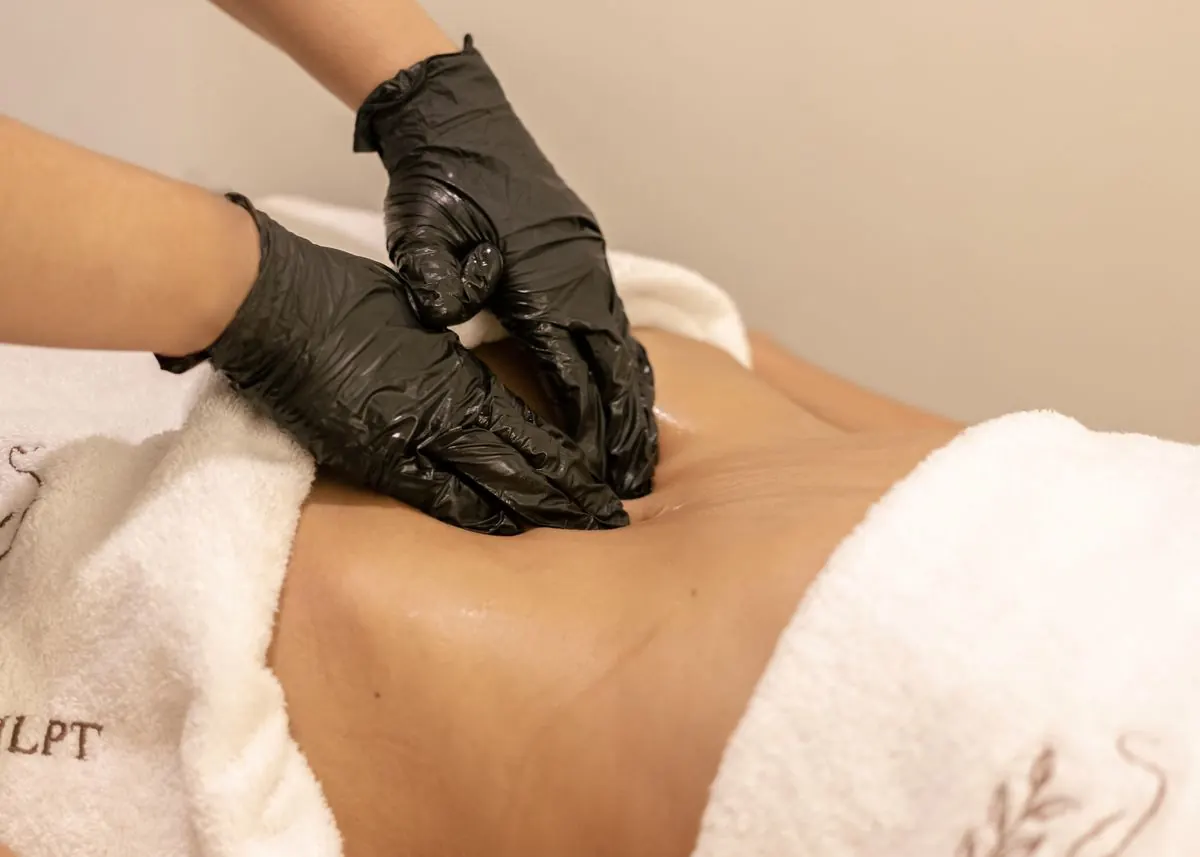
Lymphatic Drainage uses slow, precise and rhythmic movements to stimulate the flow of lymph and help the body move excess fluid. Most clients leave the session feeling noticeably lighter, with less puffiness in the legs and abdomen.
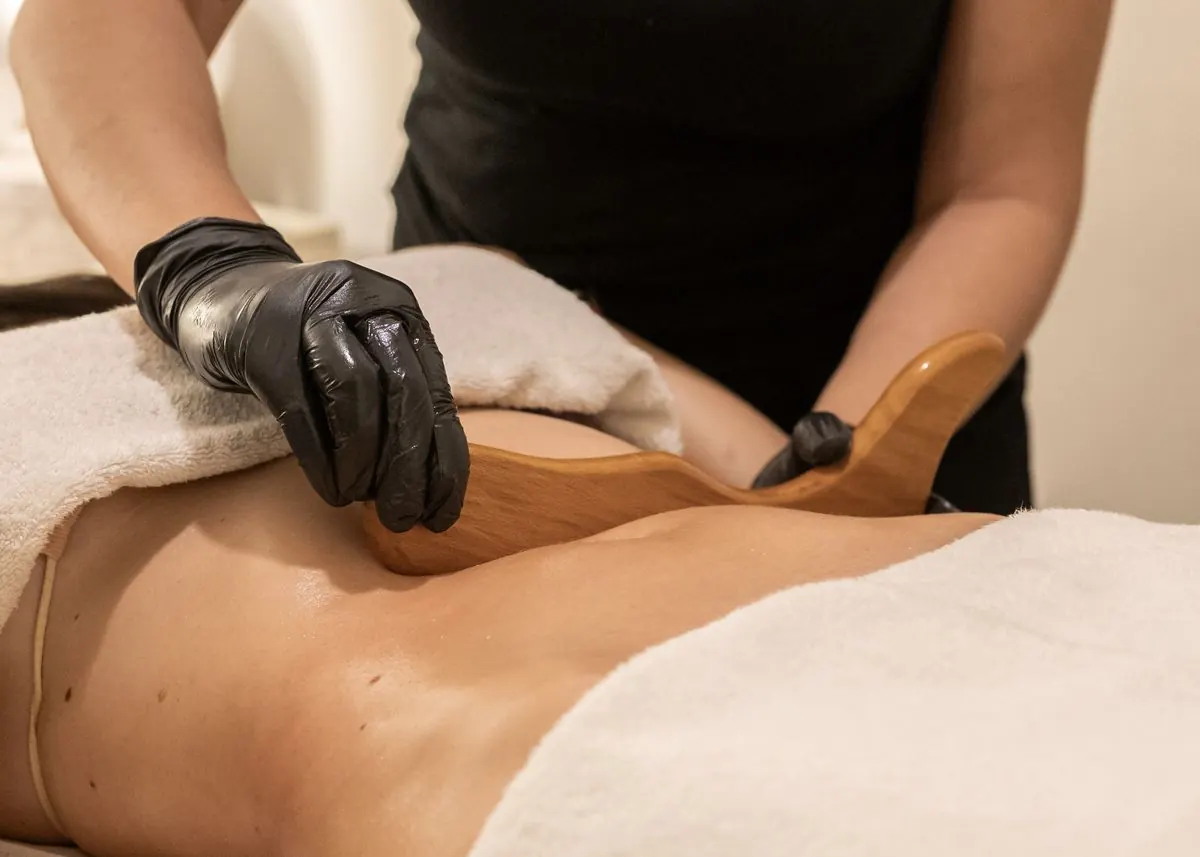
For those who also want to work on contour, Wood Therapy and Brazilian Molding combine draining movements with more intense sculpting techniques. The effect on fluid retention is often visible after the first session; lasting improvement comes from combining treatments with the habits above.
Treatments help your body do its job more efficiently — they work best as part of a routine, not as a one-off fix.
When to see a doctor
Occasional bloating is normal. However, please speak to a doctor if bloating is persistent or painful, if swelling appears suddenly or only in one leg, or if it comes with weight loss, changes in digestion or other symptoms. Body treatments are not a substitute for medical advice.
Frequently asked questions
Can lymphatic drainage reduce bloating?
It can help reduce bloating caused by fluid retention and poor circulation. Many clients feel lighter and less puffy right after the session.
How many sessions do I need?
You may feel a difference after one session. For ongoing fluid retention, a series of sessions — often one to three per week at the start — combined with healthy habits gives the best results.
Does drinking more water help with water retention?
Yes. When you’re well hydrated, your body is less inclined to hold on to fluid, and circulation works more efficiently.

Leave a comment or question
Comments are reviewed by our team before being published. Your email will never be shown.